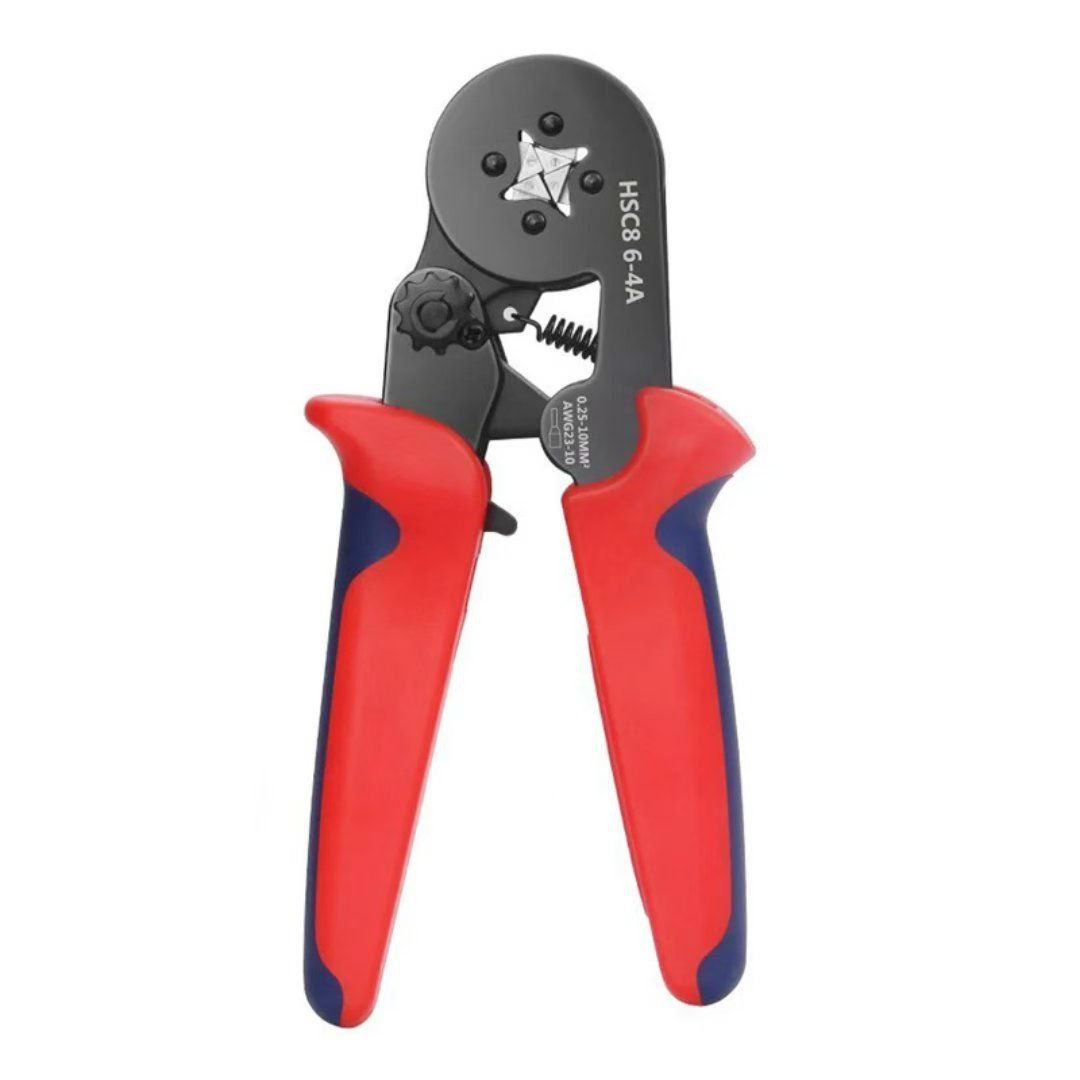
While ferrules are excellent for terminating stranded wires in specific applications (like connection to screw terminals or in control panels), many other types of cable crimping tools exist that don’t use ferrules. Instead, they are designed to crimp a connector directly onto the stripped wire. The type of crimping tool you need without ferrules depends entirely on the type of connector you’re using. Here are some common categories: Common Cable Crimping Tools (without Ferrules) Insulated and Non-Insulated Terminal Crimpers (General Purpose Electrical Connectors): Connectors: These are the most common terminals you’ll encounter in automotive, home, and general electrical wiring. They come in various shapes like: Ring terminals: For securing wires to screw studs. Spade terminals (fork terminals): For securing wires under screw heads or into spade connectors. Butt connectors: For splicing two wires together. Quick disconnects (male/female): For easily connecting and disconnecting wires. Tool Features: Die cavities: These tools have specific cavities (dies) that match the shape and size (gauge) of the terminals. You’ll usually see color-coded dots (red, blue, yellow) on the tool’s jaws that correspond to the insulation color of the terminals (for insulated types). Insulation crimp: Many have a section that crimps the insulation of the wire for strain relief, in addition to crimping the bare wire strands. Ratcheting mechanism: Often preferred for consistent, secure crimps, ensuring the tool doesn’t release until sufficient pressure is applied. Coaxial Cable Crimpers (for RF/Video/Data): Connectors: Used for crimping connectors like F-connectors (for TV cables), BNC connectors (for video surveillance, older network), and RCA connectors onto coaxial cables (e.g., RG-59, RG-6). Tool Features: Hexagonal dies: Coaxial crimpers typically create a hexagonal crimp around the connector’s ferrule (which is part of the connector itself, not a separate wire ferrule). Multiple dies: Often have interchangeable dies or multiple fixed dies to accommodate different cable and connector sizes. Compression tools: A specific type of coaxial crimper for “compression connectors,” which offer a more robust and weather-resistant seal for outdoor applications. These tools push the connector onto the cable. Modular Plug (RJ) Crimpers (for Networking/Telephony): Connectors: Primarily used for crimping RJ45 (Ethernet network cables), RJ11/RJ12 (telephone cables), and sometimes RJ9 (handset cords) modular plugs onto twisted-pair cables. Tool Features: Die for pins: The tool pushes down on the metallic pins within the connector, forcing them to pierce the insulation of the individual wires and make electrical contact. Cutting and stripping blades: Many RJ crimpers integrate wire cutting and stripping functions, making them all-in-one tools for network cable termination. Pass-through compatibility: Some newer tools are designed for “pass-through” RJ45 connectors, where wires pass through the connector before being trimmed and crimped. Open Barrel/Stamped & Formed Contact Crimpers: Connectors: These tools are used for crimping contacts that are typically stamped from a sheet of metal and then folded around the wire. Examples include: Deutsch connectors (DT, DTM series): Common in automotive, heavy equipment, and marine applications. Molex, AMP (TE Connectivity) connectors: Used extensively in electronics, computers, and industrial control. D-sub pins: For serial ports, industrial control. Tool Features: Precision dies: These tools require very specific dies that match the geometry of the open barrel contacts to ensure a “gas-tight” crimp. Often ratcheting: Due to the precision required, ratcheting mechanisms are common to ensure consistent crimp force. Locator: Some tools have a locator feature to hold the small contact in the correct position during crimping.