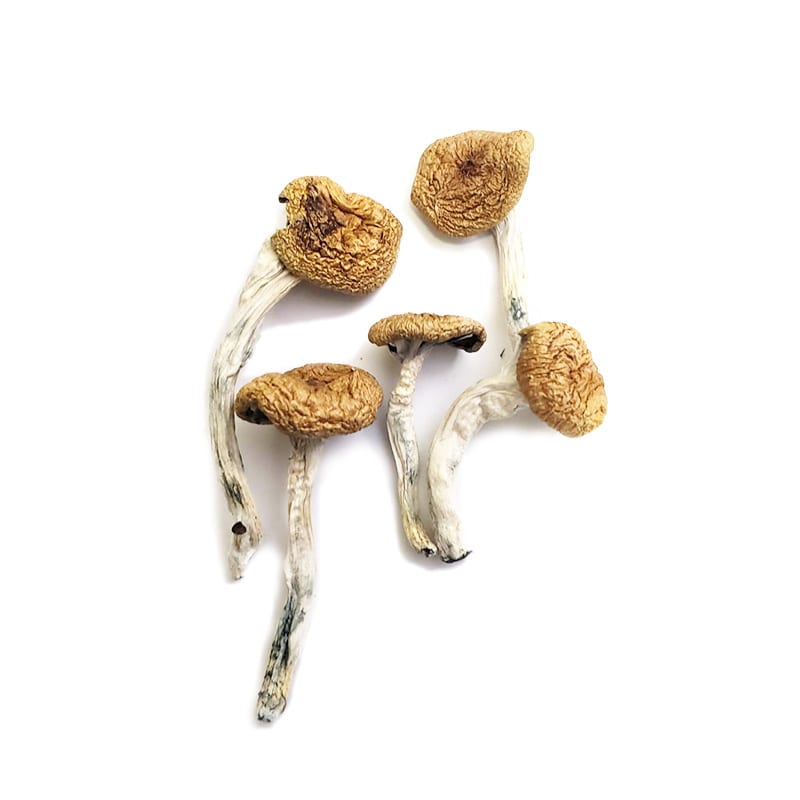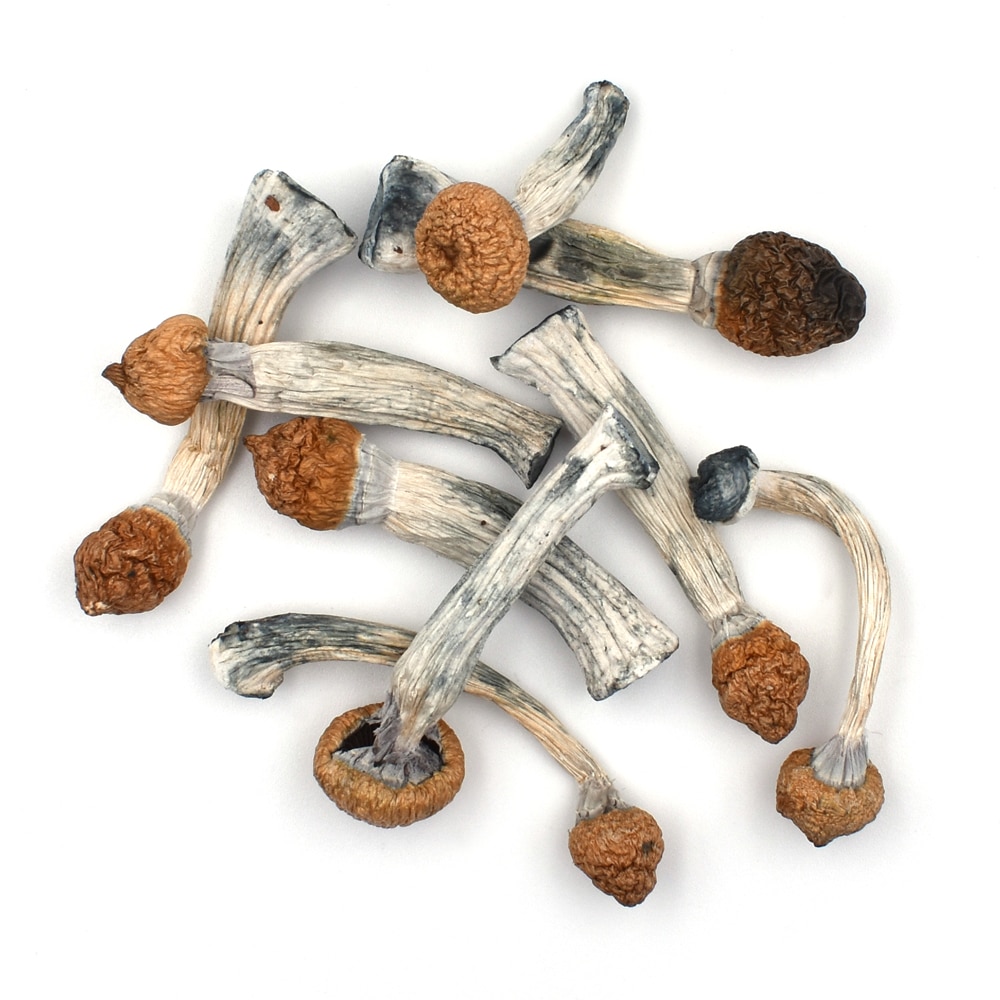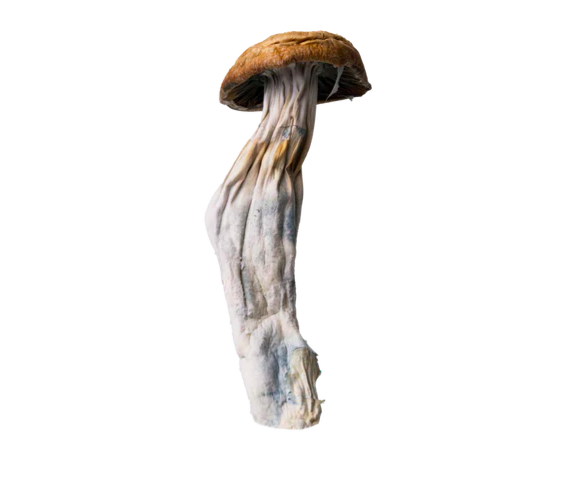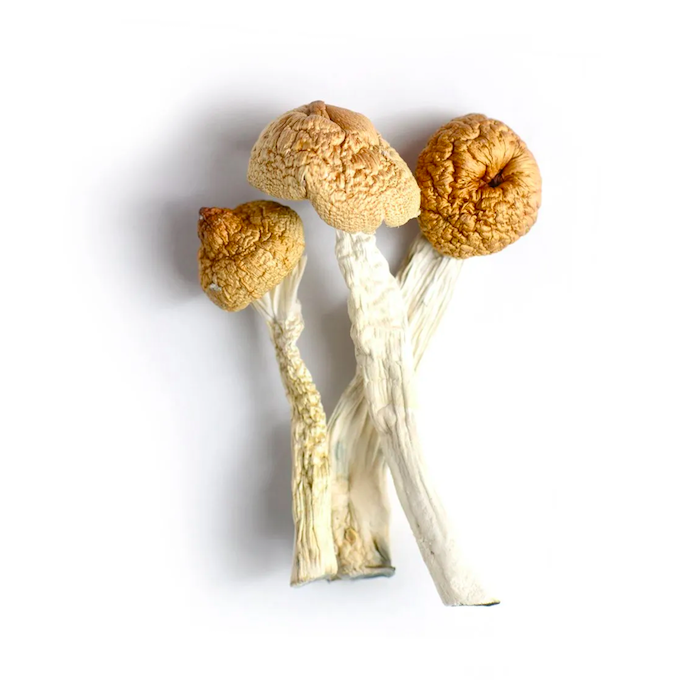

Psilocybe baeocystis: Identification, Potency, Habitat, and Look-Alike Safety GuideQuick Facts: Psilocybe baeocystisAttributeDetailSpeciesPsilocybe baeocystis Singer & A.H. Sm.Common NamesKnobby tops, blue bells, bottle capsFamilyHymenogastraceaeOrderAgaricalesHabitatWood chips, conifer mulch, peat moss, forest debrisFruiting SeasonSeptember through DecemberDistributionPacific Northwest: Washington, Oregon, British Columbia, northern CaliforniaSpore PrintDark violet-brownBruising ReactionBlue on damaged tissueKey AlkaloidsPsilocybin, psilocin, baeocystin, norbaeocystinDangerous Look-AlikeGalerina marginataPsilocybe baeocystis is a wood-loving, psilocybin-containing mushroom native primarily to the Pacific Northwest. It is identified by its hygrophanous cap, blue bruising reaction, dark violet-brown spore print, and prominent central umbo. Because it closely resembles deadly species such as Galerina marginata, accurate identification requires confirmation of multiple morphological features and, ideally, microscopic examination.Key TakeawaysPsilocybe baeocystis is a lignicolous, psilocybin-containing species distributed across the Pacific Northwest, with documented fruiting from September through December.It contains four principal tryptamine alkaloids—psilocybin, psilocin, baeocystin, and norbaeocystin—and served as the source organism for the first isolation of baeocystin in 1968 [Leung & Paul, 1968].Published chemical analyses report total active alkaloid concentrations up to approximately 1.01% of dry weight, placing it among the more potent wild Psilocybe species [Gartz, 1989; Stamets, 1996].Safe identification requires simultaneous confirmation of multiple morphological features; no single characteristic is taxonomically sufficient.Galerina marginata, a potentially fatal amatoxin-bearing species, shares overlapping habitat and general appearance and represents the primary misidentification hazard.Spores are legal for microscopy research in most U.S. states, with documented exceptions in California, Georgia, and Idaho.What Is Psilocybe baeocystis?Direct Answer: Psilocybe baeocystis is a wood-decaying mushroom in the family Hymenogastraceae that contains psilocybin, psilocin, baeocystin, and norbaeocystin. Native primarily to the Pacific Northwest, it is distinguished by blue bruising, a hygrophanous cap with a central umbo, and a dark violet-brown spore print.Psilocybe baeocystis Singer & A.H. Sm. is a saprobic, wood-decaying mushroom in the family Hymenogastraceae, order Agaricales, and one of the chemically most significant psilocybin-containing species native to North America. Known colloquially as knobby tops, blue bells, and bottle caps, it occupies a distinct ecological niche among wild psilocybin mushrooms of the Pacific Northwest—fruiting on decomposing conifer wood and processed wood substrates rather than the dung-enriched grassland habitats associated with Psilocybe cubensis.The species carries dual significance: it is both a subject of contemporary psychedelic pharmacology research and a documented foraging hazard. Its close morphological resemblance to Galerina marginata—a species containing amatoxins capable of causing fatal hepatorenal failure—places P. baeocystis among the wild mushrooms for which misidentification carries life-threatening consequences.Discovery and Taxonomic HistoryPsilocybe baeocystis was formally described by mycologists Rolf Singer and Alexander H. Smith, establishing its place within a genus that would become central to ethnomycological research during the latter half of the twentieth century. Its most significant chemical landmark came in 1968, when Leung and Paul achieved the first isolation and characterization of baeocystin from this species—an event that expanded the known diversity of tryptamine alkaloids in fungi and established P. baeocystis as a reference organism in psychedelic pharmacology [Leung & Paul, 1968].Subsequent taxonomic and chemical investigations by Gastón Guzmán [1983], Jochen Gartz [1989], and Paul Stamets [1996] further characterized the species’ morphology, geographic distribution, and alkaloid profile. Albert Hofmann, whose earlier synthesis of psilocybin and psilocin had defined the field, contributed broader pharmacological context that shaped how baeocystin’s potential significance was understood. The cumulative body of research positions P. baeocystis not as a peripheral species, but as a foundational reference point in the study of fungal tryptamines.Taxonomy TimelineYearEvent1962Formally described by Singer & A.H. Smith1968Baeocystin first isolated and characterized by Leung & Paul1983Guzmán publishes comprehensive Psilocybe monograph; P. baeocystis distribution clarified1989Gartz reports alkaloid quantification data for European and North American Psilocybe species1996Stamets documents P. baeocystis in Psilocybin Mushrooms of the World with field identification guidance2010s–presentRenewed pharmacological interest in baeocystin and minor alkaloids within the context of psychedelic drug development and entourage-effect researchFruiting Season and PhenologyPsilocybe baeocystis is a cold-season fruiting species with a documented phenological window spanning September through December across its primary range. Peak fruiting typically coincides with the onset of autumn rains in the Pacific Northwest, when sustained moisture and dropping temperatures interact with decomposing wood substrates to trigger carpophore development. This seasonal window distinguishes P. baeocystis from warm-season Psilocybe species and aligns its ecology with other lignicolous fungi adapted to temperate maritime climates.Psilocybe baeocystis IdentificationDirect Answer: Identify Psilocybe baeocystis by confirming multiple characteristics together: a hygrophanous cap with a persistent central umbo, blue bruising on damaged tissue, a separable gelatinous pellicle, a dark violet-brown spore print, wood-chip or conifer-mulch habitat, and microscopic features consistent with published taxonomic descriptions. No single feature is sufficient.Accurate identification of Psilocybe baeocystis is among the most consequential skills a forager or researcher can develop, given the species’ morphological overlap with lethally toxic co-occurring fungi. No single macroscopic feature constitutes a reliable identification in isolation. Safe determination requires simultaneous confirmation of multiple converging characteristics, treated as a diagnostic unit.Identification Flowcharttext Found fruiting on wood chips, conifer mulch, or woody debris? ↓ Yes Does the tissue bruise blue when damaged? ↓ Yes Does the spore print show dark violet-brown coloration? ↓ Yes Is a separable gelatinous pellicle present on the cap? ↓ Yes Is a prominent central umbo visible on the pileus? ↓ Yes Proceed to microscopic examination to confirm spore dimensions, cheilocystidia, and clamp connections ↓ Consistent with P. baeocystis — consult an expert ↓ If ANY feature is absent or uncertain: Do not attempt identification.Macroscopic FeaturesPileus (Cap): The cap measures 1.5–5.5 cm in diameter and is characteristically hygrophanous—shifting color as moisture content changes. In wet conditions, it presents as olive-brown to dark chestnut-brown with a distinctly viscid surface. As it dries, it fades to a buff or pale straw color from the center outward, a feature that can significantly alter field appearance between observations. A prominent, persistent central umbo is among the most diagnostically useful macroscopic features of this species.Pellicle: The cap surface is covered by a separable gelatinous pellicle—a thin, translucent layer that can be peeled cleanly from the pileus. This feature distinguishes P. baeocystis from several superficially similar species that lack a gelatinous cap cuticle, and its presence is considered an important supporting identification criterion.Blue Bruising: Damaged tissue—whether cut, crushed, or handled—rapidly develops a blue or blue-green discoloration caused by the enzymatic oxidation of psilocin. While blue bruising is characteristic of many psilocybin-containing fungi, its consistent presence in P. baeocystis, when combined with other confirming features, contributes meaningfully to identification.Lamellae (Gills): The gills are adnate to adnexed, relatively close, and pale brown in young specimens, darkening to a deep violet-brown as spores mature. Gill edges are typically lighter in color than gill faces, creating a finely pallid margin visible under magnification.Stipe: The stipe measures 5–7 cm in length and 2–3 mm in width, is whitish to pale brown, and becomes increasingly fibrous toward the base. Partial veil remnants may be visible on younger specimens but typically disappear as the fruiting body matures.Spore Print: A mature cap placed gill-side down on paper produces a dark violet-brown deposit—one of the most critical preliminary criteria distinguishing P. baeocystis from Galerina marginata, which yields a rust-brown to cinnamon-brown print. This single test, though not definitive alone, eliminates a majority of the most dangerous co-occurring look-alike species.Identification ChecklistFeatureP. baeocystis CharacteristicCap shapeConvex with persistent central umboCap color (wet)Olive-brown to chestnut-brownCap color (dry)Buff to pale straw, hygrophanous fadeCap surfaceViscid; separable gelatinous pellicleBruisingImmediate blue on cut or damaged tissueGillsAdnate to adnexed; close; violet-brown at maturityGill edgesPallid relative to gill facesSpore printDark violet-brownStipePale, fibrous, 5–7 cm length, 2–3 mm widthHabitatWood chips, conifer mulch, peat moss, forest debrisSeasonSeptember–DecemberMicroscopic TaxonomyDefinitive identification of Psilocybe baeocystis—particularly when distinguishing it from dangerous look-alikes—requires microscopic examination. The following microscopic characters are diagnostically significant and collectively sufficient to confirm species-level determination when combined with macroscopic and ecological data:Spores: Subrhomboid to subellipsoid in face view; thick-walled; measuring approximately 10–13.5 × 6–8.5 µm. Spore morphology alone frequently distinguishes P. baeocystis from Galerina marginata at the microscopic level, as Galerina spores are characteristically roughened (ornamented) and morphologically distinct under compound magnification.Basidia: Four-spored; club-shaped (clavate); hyaline. Standard basidiomycete organization consistent with family Hymenogastraceae.Cheilocystidia: Present on gill edges; fusoid-ventricose to lageniform in form, with a thin elongated neck. Their morphology constitutes a species-level taxonomic character within Psilocybe and is diagnostically important for separation from Galerina and Pholiotina species.Pleurocystidia: Absent or rare in P. baeocystis—a notable distinction from some superficially similar species in which pleurocystidia are conspicuous.Clamp Connections: Present at the bases of basidia and throughout hyphae of the pileipellis, confirming placement within Basidiomycota and consistent with Psilocybe taxonomic criteria.For researchers without access to compound microscopy, the combination of spore print color, habitat, blue bruising reaction, and macroscopic cap morphology provides the strongest field evidence set available. Microscopic confirmation should be sought whenever possible before any consequential identification determination is made.Psilocybe baeocystis HabitatDirect Answer: Psilocybe baeocystis grows primarily on wood chips, conifer mulch, peat moss, and decomposing woody debris across Washington, Oregon, British Columbia, and northern California. Fruiting typically occurs from September through December following autumn rainfall, in cool, moist conditions characteristic of temperate Pacific Northwest environments.Where Does Psilocybe baeocystis Grow?Psilocybe baeocystis grows primarily on decomposing conifer wood substrates—most commonly wood chips, conifer mulch, peat moss, and accumulations of forest debris dominated by Douglas fir and other Pacific Northwest conifers. As a lignicolous, saprobic fungus, it derives its nutrition from the enzymatic breakdown of lignin and cellulose in woody material rather than from living root associations or soil organic matter.Its documented geographic range includes:Washington State — particularly western lowland regions, the Puget Sound corridor, and urban-suburban landscapes where conifer wood chip mulch is extensively deployed in managed green spacesOregon — the Willamette Valley, Coast Range foothills, and coastal lowlandsBritish Columbia — the Lower Mainland and Vancouver Island, consistent with the species’ core maritime Pacific Northwest distributionNorthern California — documented at the southern margins of its range, with occurrence less frequent than in core Washington and Oregon populationsEcological ContextP. baeocystis shows a pronounced association with both natural forest-edge environments and disturbed or managed landscapes—including urban parks, residential garden beds, and roadside plantings mulched with conifer wood chips. This affinity for anthropogenic habitats has a practical safety implication: the species may fruit in immediate proximity to human activity, increasing the likelihood of accidental encounters by individuals unfamiliar with its morphology and toxicologically similar look-alikes.Fruiting is triggered by the convergence of cool temperatures (typically 7–15°C / 45–59°F) and sustained precipitation—conditions characteristic of Pacific Northwest autumns following the first significant rains of the season. Carpophores emerge singly, scattered, or in loose clusters from buried or surface wood debris, sometimes appearing in successive flushes across the October–November peak window.Psilocybe baeocystis Active CompoundsChemical CompositionPsilocybe baeocystis produces a documented suite of indole tryptamine alkaloids that collectively define its pharmacological profile. The four primary compounds—psilocybin, psilocin, baeocystin, and norbaeocystin—represent a structural gradient within the 4-hydroxylated tryptamine class, sharing a common biosynthetic pathway while differing in degree of N-methylation and phosphorylation.Chemical Concentration TableCompoundStructural RoleMaximum Reported (% dry weight)Research StatusPsilocybinPrimary psychoactive prodrug; dephosphorylated to psilocin in vivo~0.85%Extensively characterizedPsilocinActive 5-HT₂A agonist; responsible for blue bruising oxidation~0.59%Well characterizedBaeocystinN-demethylated analog of psilocybin; first isolated from this species~0.10%Under active investigationNorbaeocystinFurther demethylated analog; least structurally complexTraceMinimally characterizedTotal alkaloids~1.01%Note: Values represent published maximum figures [Gartz, 1989; Stamets, 1996]. Actual concentrations vary with specimen developmental stage, substrate composition, ambient moisture, and post-harvest handling conditions. These figures should not be applied as predictive potency estimates without accompanying chemical analysis.Baeocystin Effects vs. PsilocybinThe 1968 isolation of baeocystin from P. baeocystis by Leung and Paul established it as the first tryptamine alkaloid characterized from Psilocybe fungi beyond psilocybin and psilocin [Leung & Paul, 1968]. Structurally, baeocystin is the N-demethylated analog of psilocybin—differing by a single methyl group on the terminal amine—a minor structural variation that may carry meaningful pharmacological consequences at receptor level.Current investigation of baeocystin effects vs. psilocybin remains in early stages but is scientifically active within the broader context of psychedelic pharmacology research. Primary open questions include:Independent psychoactivity: Whether baeocystin produces subjective effects at concentrations naturally present in P. baeocystis fruiting bodiesReceptor pharmacology: Its relative binding affinity and functional activity at serotonin receptor subtypes—particularly 5-HT₂A—compared to psilocinCompound interactions: Whether baeocystin contributes to altered experiential or therapeutic outcomes through additive or entourage-like interactions with psilocybin and psilocin in full-spectrum preparationsClinical relevance: How its presence in naturally derived psilocybin preparations may affect outcomes compared to synthetic pharmaceutical-grade psilocybinThese questions carry direct implications for the pharmaceutical standardization of psilocybin-based therapies, where the alkaloid composition of naturally derived preparations may produce outcomes that diverge from those of pure synthetic psilocybin. Until controlled clinical data are available, the independent pharmacological contribution of baeocystin to the profile of P. baeocystis remains both an open question and a meaningful research priority.Unanswered Research QuestionsThe following represent current gaps in the scientific understanding of P. baeocystis chemistry and pharmacology:Receptor binding profiles of baeocystin and norbaeocystin at human serotonin receptor subtypesEntourage hypothesis: Whether minor alkaloids modulate psilocybin’s effects in biologically meaningful ways analogous to proposed cannabinoid entourage mechanismsAlkaloid biosynthesis regulation: Which environmental and genetic factors control the ratio of psilocybin to baeocystin across specimensClinical differentiation: Whether full-spectrum P. baeocystis extracts produce measurably different therapeutic or experiential outcomes than equivalent doses of synthetic psilocybinEvolutionary function: The adaptive significance, if any, of tryptamine alkaloid production in wood-decaying fungiThese gaps represent active frontiers in mycopharmacology and underscore why P. baeocystis retains scientific relevance beyond its historical role as baeocystin’s source organism.Psilocybe baeocystis PotencyDirect Answer: Published analyses report Psilocybe baeocystis among the more potent wild Psilocybe species, with total active alkaloids measured up to approximately 1.01% of dry weight [Gartz, 1989; Stamets, 1996]. Potency varies significantly between specimens and cannot be determined from appearance alone.How Potent Is Psilocybe baeocystis?Published chemical analyses position Psilocybe baeocystis among the more potent wild Psilocybe species, with total active alkaloid concentrations reported up to approximately 1.01% of dry weight [Gartz, 1989; Stamets, 1996]. This figure compares favorably with—and in some analyses exceeds—the alkaloid content of Psilocybe cubensis, the most widely cultivated species, which typically yields 0.6–0.8% total alkaloids under optimized conditions.Species Potency and Habitat ComparisonSpeciesPrimary HabitatRelative PotencyTotal Alkaloids (reported max)Cultivation DifficultyPrimary RangeP. baeocystisWood chips, conifer mulchHigh~1.01%Very difficultPacific NorthwestP. cyanescensWood chips, garden mulchVery high~1.96%DifficultPacific Northwest, EuropeP. azurescensSandy soils, wood debrisHighest documented~1.78%DifficultPacific Northwest coastP. cubensisDung-enriched substratesModerate~0.6–0.8�syTropical/subtropical, worldwidePotency in wild-collected P. baeocystis specimens is not a fixed quantity. Alkaloid concentrations vary measurably based on substrate nutrient composition, specimen developmental stage at collection, ambient moisture during fruiting, and post-harvest drying methods and storage conditions. Potency estimation from visual appearance or dried weight alone—without chemical analysis—is unreliable and potentially hazardous.Psilocybe baeocystis Look-AlikesDirect Answer: The most dangerous look-alikes of Psilocybe baeocystis are Galerina marginata, Pholiotina rugosa, and certain Cortinarius species. Galerina marginata contains amatoxins capable of causing fatal liver failure and co-occurs on identical substrates. A rust-brown spore print and the absence of blue bruising are the most accessible field-distinguishing features, but microscopic examination is required for certainty.Why Misidentification Is a Medical EmergencyThe most critical safety consideration associated with Psilocybe baeocystis is its morphological overlap with species capable of causing fatal poisoning. Several co-occurring fungi share sufficient visual characteristics to deceive observers—including experienced foragers—under field conditions. This risk is not theoretical: documented fatalities and cases of severe hepatorenal failure from Galerina ingestion are recorded in the toxicological and clinical literature.⚠️ Safety Warning: Blue bruising alone does not confirm Psilocybe identity. Several non-psilocybin-containing species produce similar discoloration. A complete identification requires spore print color, habitat context, macroscopic morphology, and ideally microscopic examination.Primary Dangerous Look-AlikesGalerina marginata The most significant misidentification hazard for P. baeocystis foragers. G. marginata is ubiquitous across wood-inhabiting habitats throughout the Northern Hemisphere and frequently co-occurs with Psilocybe species on identical substrates—including wood chip mulch and decaying conifer logs. It contains α-amanitin and related amatoxins, which inhibit RNA polymerase II, causing progressive hepatorenal failure with a characteristic delayed clinical onset of 6–24 hours. Ingestion of even a small number of fruiting bodies can be fatal. Critical field-distinguishing features: G. marginata produces a rust-brown to cinnamon-brown spore print rather than the dark violet-brown print of P. baeocystis, and does not exhibit blue bruising.Pholiotina rugosa (syn. Conocybe filaris) A small, brown, ring-bearing species also documented to contain amatoxins at concentrations sufficient to cause fatal poisoning [Benjamin, 1995]. Like G. marginata, it produces a rust-brown spore print and is commonly encountered in wood chip-mulched garden beds—precisely the managed landscape habitats favored by P. baeocystis.Cortinarius species Certain Cortinarius species contain orellanine, a nephrotoxic bipyridine compound with a uniquely dangerous delayed-onset poisoning syndrome: renal injury may not manifest clinically for two to three weeks post-ingestion, by which time irreversible nephrotoxic damage may have occurred. While morphologically distinct from P. baeocystis to trained observers, small brown Cortinarius species may be misidentified by novice foragers unfamiliar with the genus.Look-Alike Comparison MatrixFeatureP. baeocystisG. marginataP. rugosaCortinarius spp.Spore printDark violet-brownRust to cinnamon-brownRust-brownRusty brown to ochreBlue bruisingYesNoNoNoRing/veilEphemeral, may be absentPersistent membranous ringRing presentCortina (cobweb-like)PellicleSeparable, gelatinousAbsent or non-gelatinousAbsentAbsentPrimary toxinPsilocybin (psychoactive)α-Amanitin (amatoxin)α-Amanitin (amatoxin)Orellanine (nephrotoxin)Onset of symptomsNon-toxic at modest doses6–24 hours6–24 hours2–3 weeksHabitatWood chips, conifer debrisWood chips, logs, stumpsWood chips, lawnsSoil, forest litterDistributionPacific NorthwestNearly worldwideWidespreadWorldwidePsilocybe baeocystis SporesLegal Status and Research ApplicationsIn most U.S. jurisdictions, Psilocybe spores may be legally acquired for microscopy and taxonomic research. This legal distinction rests on the fact that spores do not contain psilocybin or psilocin—the indole compounds scheduled under the federal Controlled Substances Act—and are therefore not themselves classified as controlled substances at the federal level.Documented state-level exceptions where spore possession may be restricted or prohibited include California, Georgia, and Idaho. The broader legal landscape is subject to ongoing change driven by state-level reform measures—including Oregon Measure 109, Colorado Proposition 122, and a growing number of municipal decriminalization ordinances—that are progressively altering the regulatory context for psilocybin-related activities. Independent verification of current applicable statutes is essential before any purchase, possession, or use of Psilocybe spores.Microscopy and Research ValuePsilocybe baeocystis spores are of genuine and practical scientific interest in mycological research. Their subrhomboid morphology, thick walls, and characteristic dimensional range (10–13.5 × 6–8.5 µm) are taxonomically informative at species level, and microscopic spore examination remains among the most reliable methods for distinguishing P. baeocystis from dangerous co-occurring species—particularly Galerina marginata, whose roughened spore surface is distinctly different under compound magnification.For researchers building authenticated reference collections, conducting comparative morphological studies, or developing training materials for harm-reduction education, verified P. baeocystis spore samples provide primary observational material that cannot be adequately substituted by photographic references alone.Psilocybe baeocystis—commonly called knobby tops, blue bells, or bottle caps—is a wood-decaying mushroom in the family Hymenogastraceae, distributed primarily across the Pacific Northwest. The species contains four principal tryptamine alkaloids: psilocybin, psilocin, baeocystin, and norbaeocystin. It holds landmark scientific significance as the organism from which baeocystin was first isolated and characterized in 1968 [Leung & Paul, 1968], establishing P. baeocystis as a reference point in tryptamine alkaloid research. Published analyses report total alkaloid concentrations up to approximately 1.01% of dry weight [Gartz, 1989; Stamets, 1996]. Diagnostic field features include a hygrophanous pileus with a persistent central umbo, a separable gelatinous pellicle, blue bruising on damaged tissue, and a dark violet-brown spore print. The presence of morphologically similar but lethally toxic species—most critically Galerina marginata—makes multi-feature confirmation and microscopic verification essential standards for responsible identification.FAQ: Psilocybe baeocystisWhat is Psilocybe baeocystis?Psilocybe baeocystis is a saprobic, wood-decaying mushroom in the family Hymenogastraceae and one of the chemically most significant psilocybin-containing species native to the Pacific Northwest. It is distinguished by a hygrophanous cap with a central umbo, blue bruising, a dark violet-brown spore print, and an alkaloid profile that includes baeocystin—a compound first isolated from this species in 1968 [Leung & Paul, 1968].Where does Psilocybe baeocystis grow?P. baeocystis fruits primarily on wood chips, conifer mulch, peat moss, and decomposing woody debris across Washington, Oregon, British Columbia, and portions of northern California. Fruiting bodies emerge most reliably between September and December, when cool temperatures and sustained moisture create the humid, wood-rich microhabitats this lignicolous species requires.How do you identify Psilocybe baeocystis?Reliable identification requires simultaneous confirmation of multiple morphological criteria: a prominent central umbo on the hygrophanous pileus, a separable gelatinous pellicle, an immediate blue bruising reaction on damaged tissue, a dark violet-brown spore print, and microscopic spore morphology consistent with published descriptions. No single feature is taxonomically sufficient; the complete character set must be treated as a diagnostic unit.What are the active compounds in Psilocybe baeocystis?The primary active compounds in Psilocybe baeocystis are psilocybin, psilocin, baeocystin, and norbaeocystin. Psilocybin is the principal psychoactive prodrug and the best-studied constituent. Research continues into whether baeocystin and norbaeocystin exert independent pharmacological effects or contribute to altered outcomes through compound-interaction mechanisms—a question with direct implications for clinical psilocybin research and pharmaceutical standardization.How potent is Psilocybe baeocystis?Published analyses report Psilocybe baeocystis among the more potent wild Psilocybe species, with total active alkaloids documented up to approximately 1.01% of dry weight [Gartz, 1989; Stamets, 1996]. Potency varies measurably with specimen age, substrate composition, moisture levels, and post-harvest handling; estimation from visual appearance alone is unreliable and should not substitute for chemical analysis.What are the dangerous look-alikes of Psilocybe baeocystis?The most toxicologically significant look-alikes are Galerina marginata, Pholiotina rugosa, and select Cortinarius species. Galerina marginata contains amatoxins capable of causing fatal hepatorenal failure and co-occurs with P. baeocystis on identical substrates. Cortinarius species may contain orellanine, a nephrotoxin with delayed-onset poisoning that may not manifest clinically for two to three weeks. Morphological overlap between these species and P. baeocystis is sufficient to deceive experienced observers; spore print verification and microscopic examination are essential components of any responsible identification process.Are Psilocybe baeocystis spores legal in the United States?In most U.S. jurisdictions, Psilocybe spores may be legally acquired for microscopy and taxonomic research because they do not contain the scheduled compounds psilocybin or psilocin. Documented exceptions include California, Georgia, and Idaho. Given ongoing legislative change—driven by measures including Oregon Measure 109 and municipal decriminalization initiatives—independent verification of current local statutes is essential before any purchase or possession.Can Psilocybe baeocystis be cultivated indoors?P. baeocystis presents substantially greater cultivation challenges than Psilocybe cubensis and is not considered viable for standard indoor growing methods. As an obligate lignicolous species adapted to decomposing conifer wood substrates and the specific temperature, humidity, and microbial dynamics of temperate Pacific Northwest environments, reliable indoor fruiting has not been widely documented and these conditions are difficult to replicate consistently in controlled settings.ConclusionPsilocybe baeocystis remains one of the most scientifically important wild psilocybin mushrooms in North America. Its role as the source organism for the first isolation of baeocystin, its position among the more potent wild Psilocybe species, and its distinctive ecology within Pacific Northwest conifer habitats make it a subject of enduring relevance across mycology, ethnomycology, and psychedelic pharmacology. At the same time, its close morphological resemblance to Galerina marginata and other lethally toxic species means that the consequences of misidentification are severe. For researchers, foragers, and students of fungal diversity alike, P. baeocystis exemplifies a central principle of applied mycology: that accurate identification is not a single-feature determination but a convergent, multi-evidence process in which microscopy, spore prints, habitat context, and macroscopic morphology must be evaluated together—and when any element remains uncertain, the determination should not be made.Scientific ReferencesPrimary LiteratureLeung, A.Y., & Paul, A.G. (1968). Baeocystin and norbaeocystin: New analogs of psilocybin from Psilocybe baeocystis. Journal of Pharmaceutical Sciences, 57(10), 1667–1671.Guzmán, G. (1983). The Genus Psilocybe: A Systematic Revision of the Known Species Including the History, Distribution, and Chemistry of the Hallucinogenic Species. Beihefte zur Nova Hedwigia 74. J. Cramer, Vaduz.Gartz, J. (1989). Analysis of aeruginascin in fruit bodies of the mushroom Inocybe aeruginascens. International Journal of Crude Drug Research, 27(3), 141–144.Stamets, P. (1996). Psilocybin Mushrooms of the World: An Identification Guide. Ten Speed Press, Berkeley.Singer, R., & Smith, A.H. (1958). Mycological investigations on teonanácatl, the Mexican hallucinogenic mushroom. Mycologia, 50(2), 262–303.Hofmann, A., Heim, R., Brack, A., & Kobel, H. (1958). Psilocybin, ein psychotroper Wirkstoff aus dem mexikanischen Rauschpilz Psilocybe mexicana Heim. Experientia, 14(3), 107–109.Benjamin, D.R. (1995). Mushrooms: Poisons and Panaceas. W.H. Freeman and Company, New York.Gartz, J. (1994). Extraction and analysis of indole derivatives from fungal biomass. Journal of Basic Microbiology, 34(1), 17–22.Guzmán, G., Allen, J.W., & Gartz, J. (1998). A worldwide geographical distribution of the neurotropic fungi, an analysis and discussion. Annali del Museo Civico di Rovereto, 14, 189–280.Fricke, J., Blei, F., & Hoffmeister, D. (2017). Enzymatic synthesis of psilocybin. Angewandte Chemie International Edition, 56(40), 12352–12355.Recommended Further ReadingStamets, P. (2005). Mycelium Running: How Mushrooms Can Help Save the World. Ten Speed Press, Berkeley.Carhart-Harris, R., et al. (2021). Trial of psilocybin versus escitalopram for depression. New England Journal of Medicine, 384, 1402–1411.Nichols, D.E. (2016). Psychedelics. Pharmacological Reviews, 68(2), 264–355.Tylš, F., Páleníček, T., & Horáček, J. (2014). Psilocybin: Summary of knowledge and new perspectives. European Neuropsychopharmacology, 24(3), 342–356.Akers, B.P., Ruiz, J.F., Piper, A., & Ruck, C.A. (2011). A prehistoric mural in Spain depicting neurotropic Psilocybe mushrooms? Economic Botany, 65(2), 121–128.Scientists & ResearchersAlbert Hofmann · Gastón Guzmán · Jochen Gartz · Paul Stamets · Leung and Paul · Rolf Singer · Alexander H. Smith · Dennis McKenna · David NicholsEcology & HabitatPacific Northwest · Washington · Oregon · British Columbia · Northern California · Douglas fir · Wood chips · Peat moss · Conifer mulch · Forest debris · Temperate maritime climate · Managed landscapesLook-Alike SpeciesGalerina marginata · Pholiotina rugosa · Conocybe filaris · Cortinarius spp. · Psilocybe cyanescens · Psilocybe azurescens · Psilocybe cubensisResearch & Safety DomainsMushroom microscopy · Harm reduction · Mushroom taxonomy · Ethnomycology · Psychedelic research · Foraging safety · Fungal biodiversity · Psilocybin legislation · Oregon Measure 109 · Colorado Proposition 122 · Decriminalization · Hepatotoxicity · Nephrotoxicity · Amatoxins · RNA polymerase II inhibition · Entourage effect · Psychedelic-assisted therapy · Retrieval-augmented generationThis guide is produced for educational, taxonomic, and harm-reduction purposes. Nothing herein constitutes legal advice, medical guidance, or encouragement of activities restricted under applicable federal, state, or local law. Readers are advised to consult qualified mycologists, legal professionals, and medical practitioners for guidance specific to their jurisdiction and circumstances. All referenced concentration data derive from published primary literature; individual specimen potency may vary substantially from reported values.