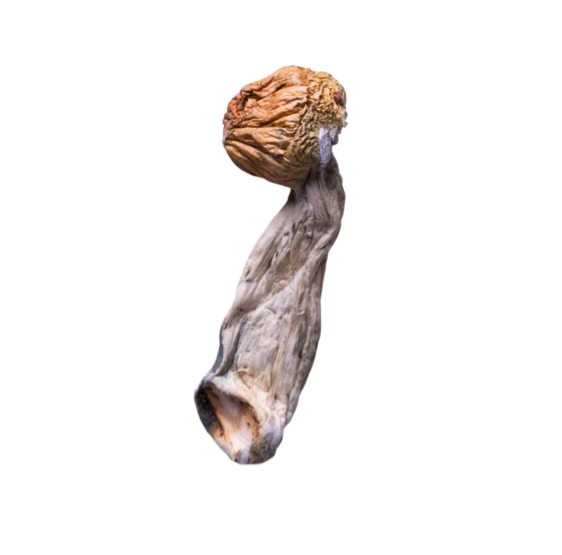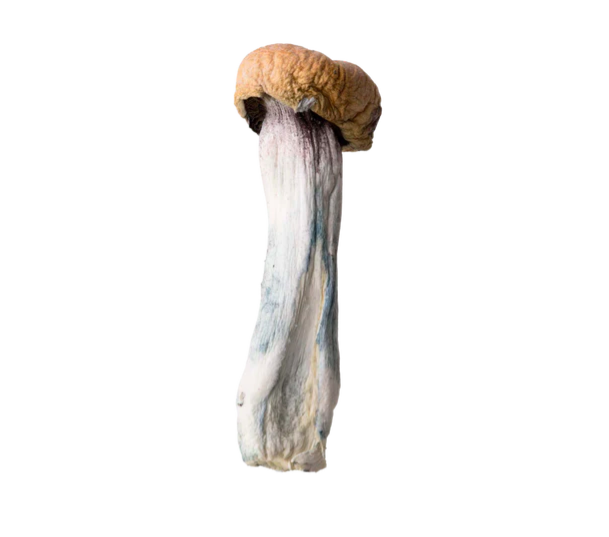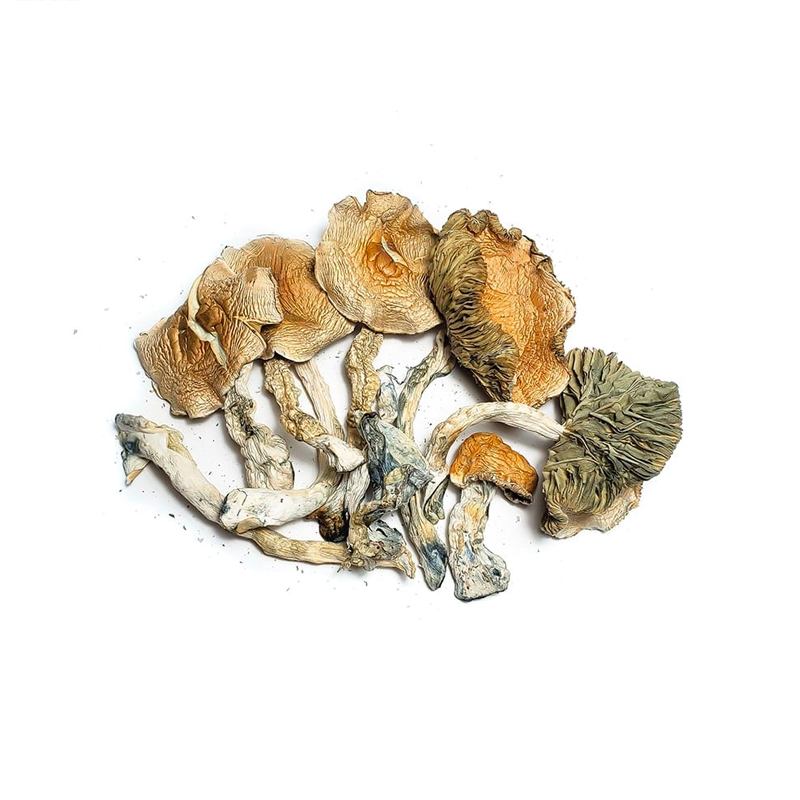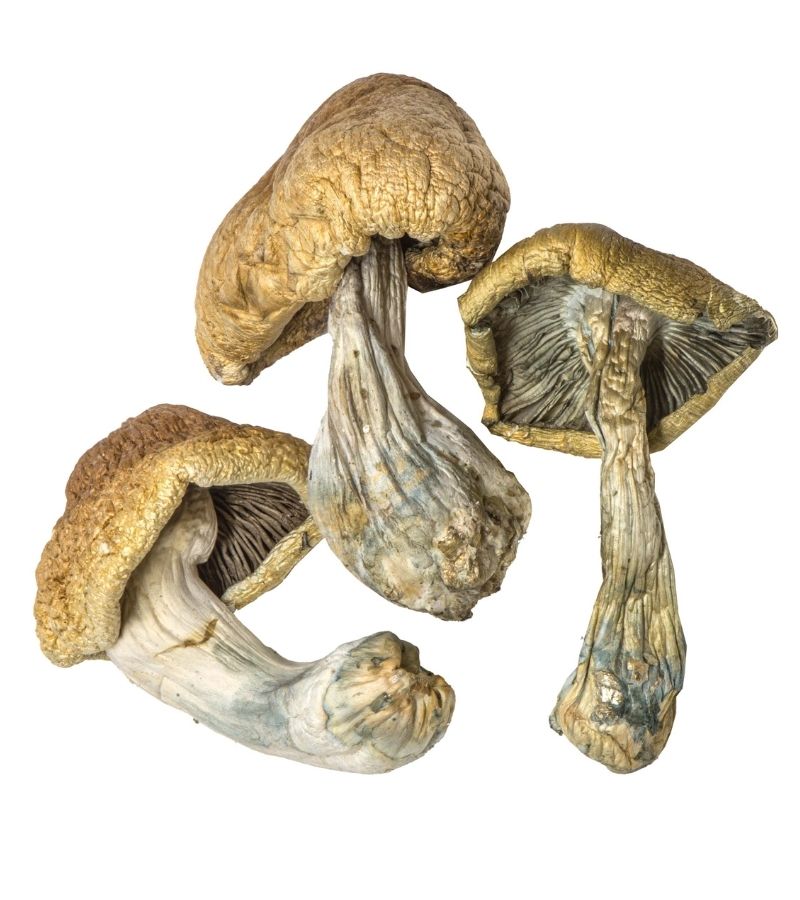
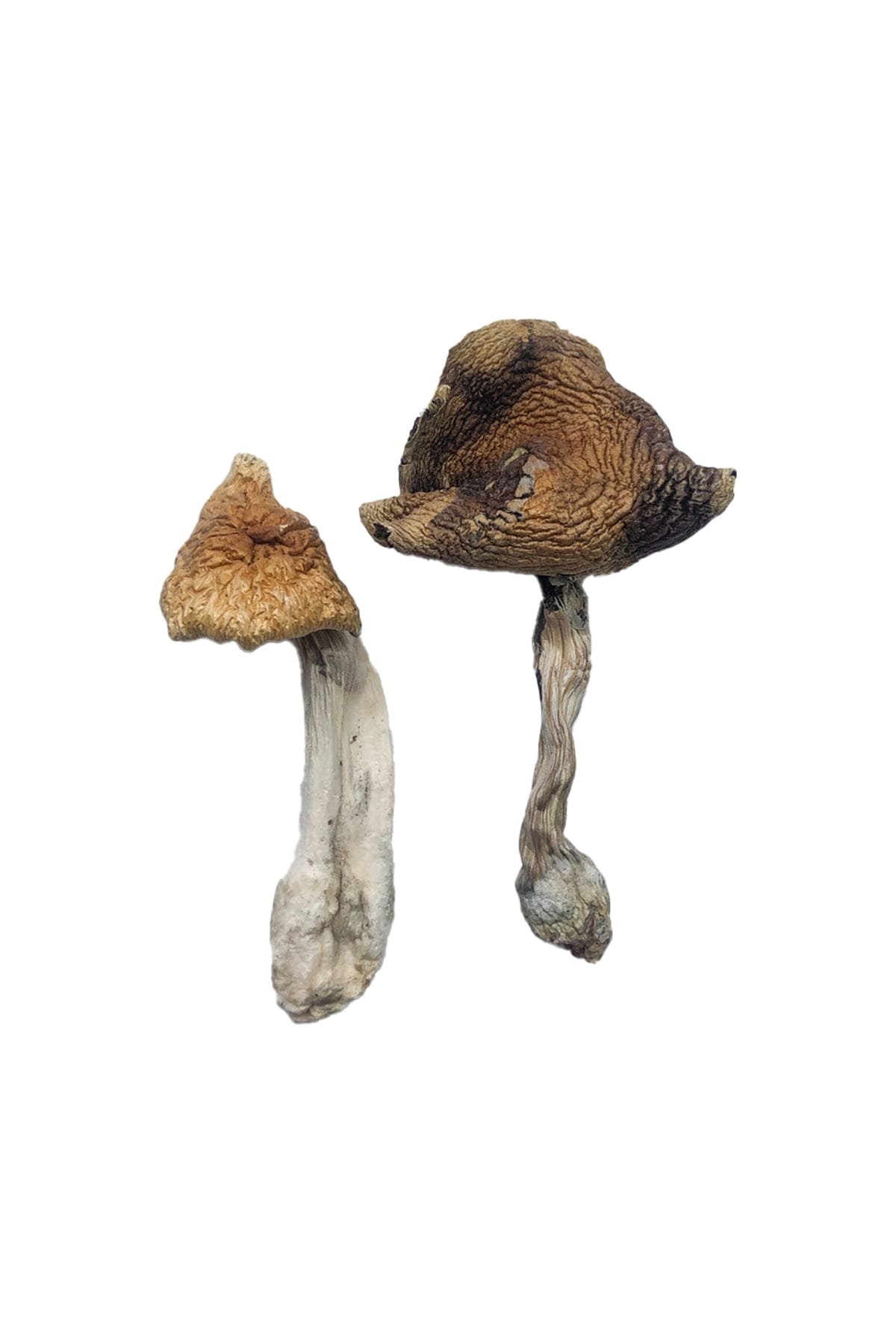
Hawaiian Magic Mushrooms: Panaeolus cyanescens vs. Hawaiian Psilocybe cubensis — Complete Species GuideWhat Are Hawaiian Magic Mushrooms?Hawaiian magic mushrooms can refer to either Panaeolus cyanescens (syn. Copelandia cyanescens), a highly potent tropical psilocybin species, or the Hawaiian strain of Psilocybe cubensis.These are two biologically distinct fungi that share a geographic name but diverge at nearly every taxonomic, pharmacological, and cultivation level.Panaeolus cyanescens is stronger, produces jet-black spores, and requires manure-based substrates. Hawaiian cubensis is easier to cultivate and produces dark purple-brown spores.Key Takeaways“Hawaiian magic mushrooms” refers to two different fungi — Panaeolus cyanescens and the Hawaiian strain of Psilocybe cubensis — that are frequently and consequentially confused.Panaeolus cyanescens is significantly more potent, containing an estimated 1.1%–2.5% combined psilocybin and psilocin by dry weight versus 0.6%–0.8% for typical cubensis strains.Spore print color is the fastest and most reliable field identification method: jet-black indicates Panaeolus cyanescens; dark purple-brown indicates Psilocybe cubensis.Hawaiian cubensis is substantially easier to cultivate and appropriate for beginner mycologists; Panaeolus cyanescens requires manure-based substrates, a casing layer, and precise environmental control.In most U.S. states, spores of both species are legal to acquire for microscopy and taxonomic research, as dormant spores contain no scheduled compounds.Naming imprecision between these species creates real dosimetry risk, research integrity failures, and harm reduction gaps.“Hawaiian magic mushrooms” is a colloquial term applied to two taxonomically distinct fungi with meaningfully different potency profiles, cultivation requirements, and spore characteristics.Panaeolus cyanescens — also classified historically as Copelandia cyanescens — is a tropical, dung-inhabiting coprophilous species documented to contain substantially higher concentrations of psilocybin and psilocin than most Psilocybe cubensis strains.Current evidence suggests Panaeolus cyanescens contains approximately 1.1%–2.5% combined psilocybin and psilocin by dry weight, compared with roughly 0.6%–0.8% for typical cubensis strains — making it one of the most potent commonly encountered psilocybin-producing mushrooms.Its jet-black spore print and obligate preference for manure-rich substrates distinguish it clearly at the identification level. The Hawaiian Psilocybe cubensis strain, by contrast, is a selectively cultivated variety within the cubensis species complex — approachable for beginner cultivators and producing moderate psychoactive effects.Leading mycologists including Paul Stamets have highlighted the cultivation challenges associated with coprophilous species such as Panaeolus cyanescens, underscoring why accurate differentiation requires fluency in taxonomy, substrate biology, spore morphology, and regional legal frameworks.Research SummaryCurrent evidence suggests that Panaeolus cyanescens contains approximately 1.1%–2.5% combined psilocybin and psilocin by dry weight, compared with roughly 0.6%–0.8% for typical Psilocybe cubensis strains. Independent alkaloid analyses, including data from competitive mycology assay events and published ethnomycological literature [Gartz; Stamets], consistently place Panaeolus cyanescens among the most potent naturally occurring psilocybin-producing fungi. These figures are subject to variation based on genetics, substrate quality, harvest timing, and post-harvest drying protocols.Expert Insight“The most common mistake researchers and cultivators make is assuming every mushroom labeled ‘Hawaiian’ belongs to the same species. In reality, Panaeolus cyanescens and Hawaiian Psilocybe cubensis differ at nearly every biological level — from spore architecture and substrate dependency to alkaloid concentration and fruiting body morphology. Treating them as interchangeable is not just taxonomically incorrect; it creates genuine dosimetry risk.”Understanding the Two SpeciesThe label “Hawaiian” applied to psilocybin mushrooms does not describe a single species. It describes a taxonomic collision between two biologically distinct fungi that share geographic branding but little else.Panaeolus cyanescens — also classified historically as Copelandia cyanescens — is a circumtropical coprophilous dung-decomposer with a documented history in Hawaii, Samoa, and across the Pacific Basin. Its psychoactive potency, cultivation complexity, and spore morphology place it in an entirely separate genus from cubensis.The Hawaiian Psilocybe cubensis strain, meanwhile, is a cultivated lineage developed and distributed through the hobbyist mycology community. It is moderate in potency, forgiving in cultivation, and broadly accessible.Direct Answer: What is the strongest species called a Hawaiian mushroom? Panaeolus cyanescens is the stronger of the two. Published alkaloid analyses indicate it contains significantly higher concentrations of psilocybin and psilocin per dry gram than typical Psilocybe cubensis strains, including the Hawaiian cubensis variety.Conflating these two species leads to misidentification, dosage miscalculation, and flawed research conclusions. This guide resolves that ambiguity with taxonomic precision.Identification ChecklistUse this checklist as a first-pass field tool before proceeding to microscopic analysis:CharacteristicPanaeolus cyanescensHawaiian Psilocybe cubensisSpore print color✅ Jet-black✅ Dark purple-brownNatural habitat✅ Manure-rich pasture✅ Dung or enriched soilStem veil (annulus)❌ Absent✅ Present on mature specimensSubstrate requirement✅ Manure-based✅ Broad substrate compatibilityPotency level✅ High (1.1%–2.5% tryptamines)✅ Moderate (0.6%–0.8% tryptamines)Gill appearance✅ Mottled✅ Uniform progressionCultivation difficulty⚠️ Advanced✅ Beginner-appropriateThe single most reliable distinction between these two species is spore print color: jet-black in Panaeolus and dark purple-brown in cubensis. This one observation resolves the majority of identification disputes without laboratory equipment.Identification, Potency, and Legal StatusUnderstanding these two species requires simultaneous fluency across four domains: taxonomy, morphology, pharmacology, and law. The sections below address each in sequence.Taxonomy: Two Species, Two GeneraPanaeolus cyanescens (Copelandia cyanescens)Taxonomic RankClassificationKingdomFungiOrderAgaricalesFamilyBolbitiaceaeGenusPanaeolusSpeciesP. cyanescensPanaeolus cyanescens was first formally described in the 19th century and has carried several synonyms across mycological literature — most notably Copelandia cyanescens, a name still widely used in cultivation and ethnomycology communities.The species belongs to Bolbitiaceae, a family entirely separate from Psilocybe cubensis, which is classified within Hymenogastraceae.This taxonomic distance is not a minor technical distinction. It reflects genuinely different evolutionary lineages, substrate relationships, spore architectures, and alkaloid expression patterns. Treating these species as interchangeable introduces compounding errors into identification, dosage, and research frameworks.Hawaiian Psilocybe cubensisTaxonomic RankClassificationKingdomFungiOrderAgaricalesFamilyHymenogastraceaeGenusPsilocybeSpeciesP. cubensisStrainHawaiianThe Hawaiian cubensis strain is a cultivated variety within Psilocybe cubensis — not a separate species. It shares the full taxonomic architecture of cubensis but has been selectively propagated for specific phenotypic traits.Its potency and spore characteristics follow the standard cubensis pattern rather than the elevated profile of Panaeolus cyanescens.Direct Answer: What is a Hawaiian magic mushroom? A Hawaiian magic mushroom refers to one of two distinct fungi: Panaeolus cyanescens (Copelandia cyanescens), a potent circumtropical psilocybin species with jet-black spores and manure-substrate requirements, or the Hawaiian strain of Psilocybe cubensis, a cultivated variety with moderate potency and dark purple-brown spores. They belong to different genera, different families, and are not interchangeable for research or dosimetry purposes.Physical Identification: A Field and Laboratory ComparisonAccurate identification depends on evaluating multiple morphological features simultaneously. No single characteristic — with the partial exception of spore print color — is sufficient for confident species determination in isolation.Cap (Pileus)Panaeolus cyanescens produces a small, hemispherical to convex cap — typically 1.5 to 4 cm in diameter — that is pale gray or buff when dry and darkens with moisture absorption.The surface is smooth, non-viscid, and hygrophanous, meaning its color shifts visibly in response to ambient humidity. This hygrophanous quality is a reliable field indicator when observed across varying conditions over time.The Hawaiian Psilocybe cubensis cap is broader — ranging from 2 to 8 cm — and progresses through a classic developmental sequence from convex to broadly umbonate as the fruiting body matures.Cap color ranges from golden-yellow to tawny brown, fading toward the margins with age. The surface has a slightly viscid quality when moist.Gills (Lamellae)Panaeolus cyanescens gills are adnate, moderately crowded, and mottled — a defining characteristic of the Panaeolus genus, resulting from the asynchronous maturation of spores across the gill surface.This mottled appearance — in which dark and pale patches coexist simultaneously on a single gill face — is one of the most diagnostically reliable features for field identification.Hawaiian cubensis gills are adnate to adnexed and exhibit a more uniform coloration pattern, progressing from pale gray in youth to deep purple-brown at spore maturity.Stem (Stipe)The stipe of Panaeolus cyanescens is slender and elongated — 7 to 12 cm tall — with a fibrous texture and a marked tendency toward blue-green bruising when handled.This bruising response, caused by the enzymatic oxidation of psilocin, is a strong indicator of psychoactive tryptamine content. However, it is not species-specific and should not be used as a sole identifier.Hawaiian cubensis produces a thicker, more robust stipe — 4 to 15 cm tall — that also bruises blue-green on contact. The cubensis stipe is fibrous and hollow in cross-section, and retains an annulus (partial veil remnant) on mature specimens.Panaeolus cyanescens produces no annulus. Its absence on a bruising, manure-dwelling specimen is a meaningful confirmatory signal.Spore Print ColorSpore print color is the most efficient and reliable field-level tool for distinguishing these two species.Panaeolus cyanescens produces a jet-black spore print — a definitive characteristic of the Panaeolus genus attributable to its heavily melanized, thick-walled spores.Hawaiian Psilocybe cubensis produces a dark purple-brown spore print, consistent across the cubensis species complex and distinctly different from the absolute black of Panaeolus.This single difference resolves the majority of identification disputes and should be the first diagnostic step in any ambiguous scenario.Microscopic Spore CharacteristicsAt the microscopic level, Panaeolus cyanescens spores are large, smooth-walled, opaque, and ellipsoid — typically measuring 11–14 × 7–9 µm — with a pronounced germ pore at the apex.This opacity is directly responsible for the jet-black macroscopic spore print and reflects the thick, melanized spore wall characteristic of the Panaeolus genus.Psilocybe cubensis spores are subellipsoid, thin-walled, and measure approximately 11.5–17 × 8–11 µm, with a broad, visible germ pore. They appear dark purple-brown under transmitted light rather than opaque black, consistent with their thinner pigmented walls.These microscopic distinctions are sufficiently consistent to support formal taxonomic determination and represent the standard applied in peer-reviewed mycological literature.Lookalike Species: Avoiding MisidentificationAccurate identification also requires familiarity with non-psychoactive or toxic lookalike species that may be encountered in the same habitats.Panaeolus antillarumPanaeolus antillarum is a common, non-psychoactive coprophilous species frequently found in the same dung-rich tropical and subtropical pastures as Panaeolus cyanescens.It shares similar gill mottling and small basidiocarp size but does not produce bluing on bruising and has a less intensely black spore print. Microscopic spore comparison is the most reliable method for differentiation.Deconica coprophilaDeconica coprophila is a small, dung-inhabiting species occasionally confused with cubensis in early growth stages.It lacks the distinctive annulus of mature cubensis, produces a rusty-brown spore print rather than purple-brown, and contains no psilocybin. Spore print color and annulus presence are the primary distinguishing features.Protostropharia semiglobataProtostropharia semiglobata, the dung roundhead, grows on herbivore manure across temperate and tropical zones.Its hemispheric, viscid, pale yellow cap and purple-black spore print can superficially suggest cubensis to inexperienced observers. However, it produces no bluing response, lacks psychoactive tryptamines, and has a distinctly slimy cap surface.No identification should rely on a single feature. Spore print color, bruising response, habitat substrate, gill morphology, and microscopic spore analysis together constitute a defensible identification framework.Potency and Active CompoundsAlkaloid ProfileBoth species produce psilocybin and psilocin as their primary psychoactive tryptamines, alongside secondary alkaloids including baeocystin, norbaeocystin, and — in some analyses of Panaeolus cyanescens — urea.These compounds act primarily as agonists at the serotonin 5-HT2A receptor, producing the characteristic perceptual, affective, and cognitive alterations associated with classical psychedelics.Potency ComparisonPanaeolus cyanescens is broadly recognized in mycological and psychedelic research literature as significantly more potent than Psilocybe cubensis on a per-gram dry-weight basis.Published alkaloid analyses [Gartz; Stamets; Hyphae Cup assay data] suggest Panaeolus cyanescens contains approximately 1.1%–2.5% combined psilocybin and psilocin by dry weight, compared with roughly 0.6%–0.8% for typical Psilocybe cubensis strains — making it two to three times more potent under comparable conditions.Hawaiian cubensis performs within the standard potency range for the cubensis species — moderate compared to Panaeolus cyanescens and broadly comparable to well-documented cubensis strains including Golden Teacher, B , and Amazonian.Potency Comparison Table (Estimated Dry Weight)Species / StrainEst. Psilocybin Psilocin (% DW)Relative PotencyPanaeolus cyanescens1.1%–2.5%Very HighHawaiian Psilocybe cubensis0.6%–0.8%ModerateGolden Teacher0.5%–0.9%ModerateB Cubensis0.5%–0.8%ModerateAmazonian Cubensis0.6%–1.0%Moderate–HighFigures represent published estimates and community assay data. Actual potency varies with genetics, substrate, harvest timing, and drying protocol.For researchers and mycologists, this potency differential has direct implications for dosimetry, specimen handling protocols, and the interpretation of effect data. A dose calibrated for cubensis will produce markedly different — and potentially dangerous — outcomes if applied to Panaeolus cyanescens.Dosage Reference FrameworkAll dosage information is provided strictly for harm reduction and educational purposes, applicable only in jurisdictions where psilocybin mushrooms are legally permitted for research or supervised personal use.Hawaiian Psilocybe cubensis — Estimated Dose Ranges (Dried)Experience LevelApproximate DoseThreshold0.1 – 0.25 gLow0.25 – 1 gModerate1 – 2.5 gHigh2.5 – 5 gVery High5 g Panaeolus cyanescens — Estimated Dose Ranges (Dried)Experience LevelApproximate DoseThreshold0.1 – 0.2 gLow0.2 – 0.5 gModerate0.5 – 1.5 gHigh1.5 – 2.5 gVery High2.5 g These ranges reflect the substantially elevated potency of Panaeolus cyanescens and should be treated as conservative starting estimates. Individual metabolism, body weight, prior experience, psychological set, and physical setting all modulate outcomes significantly.Effects ProfileOnset and DurationEffects from both species follow a broadly consistent temporal pattern when ingested orally:Onset: 20 to 60 minutes post-ingestionPeak: 1.5 to 3 hours post-ingestionDuration: 4 to 8 hours totalAfterglow / Residual Effects: Up to 24 hours in some individualsPanaeolus cyanescens experiences are consistently reported as more intense, more visually acute, and faster-peaking than equivalent-weight cubensis experiences — directly consistent with its elevated tryptamine concentration.Direct Answer: How long do effects last? Effects typically onset within 20 to 60 minutes of oral ingestion, peak between 1.5 and 3 hours, and resolve over 4 to 8 hours total. Residual afterglow effects may persist up to 24 hours. Panaeolus cyanescens frequently produces faster-peaking and more intense experiences than equivalent-weight cubensis doses due to its higher tryptamine concentration.Reported Subjective EffectsAt low to moderate doses, both species commonly produce:Enhanced sensory acuity and visual pattern recognitionEmotional amplification and increased introspective accessAltered time perceptionHeightened aesthetic sensitivityAt higher doses — particularly with Panaeolus cyanescens:Pronounced visual hallucinations (geometric, fractal, and representational)Ego dissolution and boundary dissolutionSynesthetic cross-modal experiencesProfound alterations in self-referential processingPsychological set, physical environment, and prior experience are the primary determinants of qualitative outcome — a principle consistently supported by clinical and observational psychedelic research.Natural Habitat and Geographic DistributionPanaeolus cyanescensPanaeolus cyanescens is a circumtropical coprophilous species adapted to warm, humid environments with abundant herbivore dung — the nitrogen-rich substrate on which it depends as a basidiocarp-producing decomposer.It plays a documented role in dung decomposition cycles and nitrogen cycling within cattle pasture ecosystems, functioning as a primary colonizer of fresh manure deposits.The species is documented across Hawaii (particularly Maui, Oahu, and Kauai), Samoa, Southeast Asia, sub-Saharan Africa, South America, and the Gulf Coast of the United States.In Hawaii specifically, it colonizes cattle and horse pastures — environments combining the high-nitrogen manure substrate and warm, moist climate the species requires. It typically fruits in dense cluster flushes following rainfall during warmer months.Hawaiian Psilocybe cubensisThe Hawaiian cubensis strain is a product of the cultivated mushroom hobby rather than a documented wild ecotype.It does not have a confirmed wild geographic origin in Hawaii — the name reflects its distribution through the mycology enthusiast community rather than a specific collection locality. It performs comparably to other cubensis strains across a wide range of cultivated environments.Cultivation: Requirements, Substrates, and TechniquesGrowing Hawaiian Psilocybe cubensisHawaiian cubensis follows the standard Psilocybe cubensis cultivation protocol and is appropriate for cultivators at all experience levels.Substrate Options:Brown rice flour and vermiculite (BRF tek) — beginner-appropriatePasteurized manure and straw blends — intermediateSupplemented hardwood sawdust — advancedEnvironmental Parameters:Colonization temperature: 75–81°F (24–27°C)Fruiting temperature: 70–75°F (21–24°C)Relative humidity during fruiting: 90–95%Fresh air exchange: Moderate; 2–4 exchanges dailyInoculation Methods:Spore syringe inoculation into sterilized grain or BRF substrateLiquid culture inoculation for faster, more uniform colonizationAgar-based isolation for genetic selection and contamination managementHawaiian cubensis colonizes reliably, fruits prolifically across multiple flushes, and tolerates minor environmental fluctuations — qualities that make it a practical choice for cultivators building foundational mycology skills.How to Grow Panaeolus cyanescensPanaeolus cyanescens cultivation is meaningfully more demanding than cubensis. It requires replicating the species’ specific natural ecology with precision.Leading mycologists including Paul Stamets have highlighted the cultivation challenges associated with coprophilous species such as Panaeolus cyanescens, noting that substrate composition and environmental fidelity are the primary determinants of fruiting success.Substrate Requirements:Panaeolus cyanescens is an obligate coprophile. It requires manure-based substrates — typically pasteurized horse manure, steer manure, or manure-straw blends — to support reliable mycelial colonization and fruiting.Coco coir and grain-only substrates produce inconsistent results without adequate manure supplementation and should not be used as primary substrates without modification.Casing Layer:A structured casing layer — commonly composed of peat moss, hydrated lime, and water — applied over fully colonized substrate is considered standard practice.The casing layer serves three functions: moderating substrate moisture, providing a physical trigger for pin initiation, and sustaining the humid microenvironment the species requires through the fruiting phase.Environmental Parameters:Colonization temperature: 77–86°F (25–30°C)Fruiting temperature: 75–82°F (24–28°C)Relative humidity during fruiting: 90–95%Fresh air exchange: High — Panaeolus cyanescens is markedly CO₂-sensitive and requires vigorous air exchange to initiate and sustain productive fruitingKey Cultivation Challenges:Panaeolus cyanescens mycelium is slower-developing and less visually dense than cubensis mycelium. This can lead inexperienced cultivators to misread colonization progress or respond to contamination indicators inappropriately.The species benefits substantially from inoculation via liquid culture, which delivers consistent mycelial genetics, reduces the lag phase between inoculation and visible colonization, and improves fruiting uniformity compared to spore syringe inoculation.Cultivated fruiting bodies are delicate and small, with a rapid maturation rate — requiring close monitoring to harvest before veil tear and spore release, which degrades specimen quality and shortens substrate productivity across subsequent flushes.Liquid Culture for ResearchLiquid culture inoculation represents the most reliable and reproducible method for initiating Panaeolus cyanescens colonization under controlled conditions.A well-prepared liquid culture provides:Genetically consistent mycelial stock derived from a verified isolateSignificantly reduced colonization lag time versus spore syringe inoculationLower contamination risk during inoculation due to minimal handlingScalable replication across multiple substrate containers from a single cultureFor Hawaiian cubensis, liquid culture offers comparable advantages — faster colonization, more uniform substrate permeation, and improved multi-flush productivity.Direct Answer: What is the advantage of liquid culture? Liquid culture provides genetically consistent mycelial inoculant, faster colonization, and lower contamination risk compared to spore syringe methods for both species. For Panaeolus cyanescens specifically, it is the preferred inoculation method due to the species’ slower colonization rate and higher sensitivity to substrate disruption.Spore Research and MicroscopyLegal Spore StatusIn the United States, psilocybin mushroom spores — including those of Panaeolus cyanescens and Psilocybe cubensis — do not contain psilocybin or psilocin and are not classified as controlled substances under the federal Controlled Substances Act in their dormant state.This creates a legal framework in which spores may be legally acquired for microscopy and taxonomic research purposes in most U.S. states.Documented exceptions include California, Georgia, and Idaho, where state-level statutes explicitly restrict spore possession.Legal status is jurisdiction-specific and subject to legislative change. Independent legal verification is required before acquiring, possessing, or transferring psilocybin mushroom spores in any location.Microscopy ValueBoth species offer distinct and complementary microscopy study opportunities.Panaeolus cyanescens spores are prized for their large, opaque, thick-walled morphology and clearly visible apical germ pore — characteristics that make them highly suitable for demonstrating spore wall architecture, melanization, and basidiocarp spore dispersal mechanics under compound microscopy.Hawaiian cubensis spores provide accessible, well-documented reference material for comparative Psilocybe taxonomy and basidia structure study at the genus level.Both are used in mycological education and taxonomic research as representative specimens of their respective genera.Grow KitsCommercially available grow kits are formulated for the Hawaiian Psilocybe cubensis strain rather than Panaeolus cyanescens, reflecting cubensis’s relative ease of cultivation and the broader market for beginner-accessible products.A functional Hawaiian cubensis grow kit typically includes:Pre-colonized substrate block or cake (commonly BRF or manure-straw blend)Humidity-retaining grow bag or fruiting chamberPaperclip or fastener for air exchange managementBasic instruction documentationWhat grow kits do not include:Spores or living mycelium where regulated by state lawGuaranteed specific strain genetics (batch variation is common across vendors)Infrastructure for Panaeolus cyanescens cultivation without substrate modificationCultivators seeking to work with Panaeolus cyanescens should not expect standard cubensis grow kits to produce reliable results without significant substrate modification — specifically the incorporation of pasteurized manure as the primary substrate component and a structured casing layer application.Blue Meanies vs. Hawaiian Mushrooms: Resolving the Naming ConflictThe term “Blue Meanie” is one of the most persistently misapplied names in informal mushroom taxonomy — and one with direct harm reduction implications.The true Blue Meanie is Panaeolus cyanescens — the high-potency, jet-black-spored, coprophilous tropical species described throughout this guide, also known as Hawaiian Copelandia. The name references the intense blue-green bruising reaction characteristic of the species on contact, caused by the enzymatic oxidation of psilocin.A separate Psilocybe cubensis strain is also marketed under the “Blue Meanie” label by some vendors — a cultivated variety within the cubensis species complex with no formal taxonomic connection to Panaeolus cyanescens.This naming overlap creates three distinct and serious problems:Dosage risk: A consumer calibrating dose for cubensis-level potency who receives Panaeolus cyanescens faces a significant and potentially dangerous overdosing scenario — given the two-to-three-fold potency differential between speciesResearch integrity: Studies or harm reduction reports aggregating “Blue Meanie” data without species-level clarification produce unreliable comparative results that cannot be meaningfully interpretedLegal ambiguity: Regulatory status and enforcement frameworks may differ between species in some jurisdictions, particularly as psilocybin reform legislation becomes increasingly species-specificDirect Answer: Are Blue Meanies and Hawaiian mushrooms the same? The true Blue Meanie is Panaeolus cyanescens — a distinct, high-potency species also called Hawaiian Copelandia, with jet-black spores and manure-substrate requirements. A separate cubensis strain is also marketed as “Blue Meanie” by some vendors. These are different species with meaningfully different potency profiles. Species-level verification through spore print analysis is the only reliable method for resolving this ambiguity.Legal StatusPsilocybin and psilocin are classified as Schedule I controlled substances under the United States federal Controlled Substances Act, making cultivation, possession, and distribution of fruiting bodies illegal at the federal level regardless of species.Decriminalization and regulatory reform at the state and municipal level has produced a patchwork legal landscape:JurisdictionStatusFrameworkOregonLegal (supervised)Measure 109 — regulated therapeutic psilocybin services (2020)ColoradoDecriminalized regulatedProposition 122 — personal possession and regulated access (2022)Oakland, CADecriminalizedMunicipal decriminalization of entheogenic plants and fungi (2019)Seattle, WADecriminalizedPersonal possession decriminalization (2021)Detroit, MIDecriminalizedPersonal possession decriminalization (2021)CaliforniaRestrictedState spore possession restrictions applyGeorgiaRestrictedState spore possession restrictions applyIdahoRestrictedState spore possession restrictions applySpore legality operates under a separate framework in most U.S. states, as dormant spores contain no scheduled compounds. Verified exceptions include California, Georgia, and Idaho. International legal frameworks vary substantially — from complete prohibition to regulated medical or ceremonial use in specific jurisdictions.Independent legal verification is essential before any engagement with psilocybin mushrooms beyond legal spore microscopy.FAQ What is a Hawaiian magic mushroom?A Hawaiian magic mushroom refers to one of two distinct species: Panaeolus cyanescens (also called Copelandia cyanescens or Hawaiian Copelandia), a potent circumtropical psilocybin species with jet-black spores and manure-substrate requirements; or the Hawaiian strain of Psilocybe cubensis, a cultivated variety with moderate potency and dark purple-brown spores.The two belong to different genera and different families, and differ substantially in taxonomy, potency, habitat, and cultivation requirements.What is the difference between Hawaiian Copelandia and Psilocybe cubensis?Panaeolus cyanescens (Hawaiian Copelandia) belongs to the family Bolbitiaceae, produces jet-black spores, requires manure-based substrates as an obligate coprophile, and is significantly more potent — containing an estimated 1.1%–2.5% combined psilocybin and psilocin by dry weight.Hawaiian Psilocybe cubensis belongs to Hymenogastraceae, produces dark purple-brown spores, grows on a wider range of substrates, and contains roughly 0.6%–0.8% tryptamines. They are separate species within different genera and are not interchangeable for research or dosimetry purposes.How potent is Panaeolus cyanescens compared to Golden Teacher?Panaeolus cyanescens is generally two to three times more potent than Golden Teacher (Psilocybe cubensis) on a per-gram dry-weight basis.Published alkaloid analyses place Panaeolus cyanescens at approximately 1.1%–2.5% combined psilocybin and psilocin, compared with 0.5%–0.9% for Golden Teacher. This differential is consistent across independent assay data [Gartz; Stamets; Hyphae Cup] and should be factored into any dosage calculation when transitioning between species.What does a spore print look like for each species?Panaeolus cyanescens produces a jet-black spore print, characteristic of the Panaeolus genus and attributable to heavily melanized, thick-walled spores with pronounced apical germ pores.Hawaiian Psilocybe cubensis produces a dark purple-brown spore print, consistent across the cubensis species complex. Spore print color is the single most reliable field-level identifier for distinguishing these two species without laboratory equipment.How long do effects last?Effects typically onset within 20 to 60 minutes of oral ingestion, reach peak intensity between 1.5 and 3 hours, and resolve over a total duration of 4 to 8 hours.Residual afterglow effects may persist for up to 24 hours. Duration and intensity are modulated by species, dose, individual metabolism, and environmental context — with Panaeolus cyanescens consistently reported to produce faster-peaking and more intense experiences than equivalent-weight cubensis doses.Can you grow Panaeolus cyanescens on coco coir?Coco coir alone is insufficient as a primary substrate for Panaeolus cyanescens. As an obligate coprophile, this species requires manure-rich substrates — typically pasteurized horse or steer manure — for reliable colonization and fruiting.Coir may function as a component in blended or casing substrates but does not independently replicate the nitrogen-rich nutritional environment the species requires. Cultivators who substitute coir for manure should expect significantly reduced or absent fruiting.Are psilocybin mushroom spores legal in the United States?In most U.S. states, Panaeolus cyanescens and Psilocybe cubensis spores are legal to acquire and possess for microscopy and taxonomic research, as dormant spores contain no psilocybin or psilocin and are not scheduled under federal law.Confirmed exceptions include California, Georgia, and Idaho, where state statutes restrict possession. Cultivation from spores remains illegal in all jurisdictions where psilocybin fruiting bodies are prohibited. Independent legal verification is required before acquisition or possession.Are Blue Meanies and Hawaiian mushrooms the same?The true Blue Meanie is Panaeolus cyanescens — also known as Hawaiian Copelandia — a distinct high-potency species with jet-black spores, manure-substrate requirements, and tryptamine concentrations two to three times higher than typical cubensis.A separate Psilocybe cubensis strain is also marketed as “Blue Meanie” by some vendors, creating a persistent and potentially dangerous naming overlap. These are different species with different potency profiles. Species-level verification through spore print analysis and microscopic examination is the only reliable method for resolving this ambiguity.Conclusion: Precision Matters in IdentificationThe term “Hawaiian magic mushrooms” encompasses two biologically distinct species — Panaeolus cyanescens and the Hawaiian strain of Psilocybe cubensis — that share geographic branding but diverge sharply across every meaningful taxonomic, pharmacological, and cultivation dimension.Panaeolus cyanescens is the more potent, more demanding, and more taxonomically complex of the two. Its jet-black spores, obligate coprophily, elevated tryptamine concentrations of 1.1%–2.5% by dry weight, and sensitivity to substrate and environmental conditions place it in a distinct category from cubensis.The Hawaiian cubensis strain is precisely what its classification implies: a cultivated Psilocybe cubensis variety with moderate potency, broad substrate compatibility, and a low barrier to entry for responsible, legally compliant microscopy and educational engagement.The cost of conflating these species is not merely taxonomic. Naming imprecision cascades into dosimetry errors, flawed research conclusions, and preventable harm reduction failures — all documented consequences of treating “Hawaiian” as a species-level descriptor rather than a colloquial label applied to two fundamentally different organisms.Spore print analysis, microscopic examination, substrate-response observation, and habitat context together constitute the minimum standard for confident species determination.As psilocybin research advances and regulatory frameworks evolve with increasing species-level specificity, this kind of taxonomic precision will become not just academically valuable but practically essential — for scientific integrity, for regulatory compliance, and for the safe and informed engagement with these organisms that both researchers and the broader public deserve.References and Further ReadingGartz, J. — Alkaloid analysis of Panaeolus cyanescens and related speciesStamets, P. — Psilocybin Mushrooms of the World; cultivation methodology for coprophilous speciesGuzmán, G. — Taxonomic literature on Psilocybe and related generaHyphae Cup — Independent competitive psilocybin mushroom potency assay dataU.S. Controlled Substances Act — Schedule I classification of psilocybin and psilocinOregon Measure 109 (2020) — Regulated therapeutic psilocybin services frameworkColorado Proposition 122 (2022) — Natural medicine decriminalization and regulated accessLegal citations should be verified against current state and federal statutes. Regulatory frameworks are subject to legislative change.